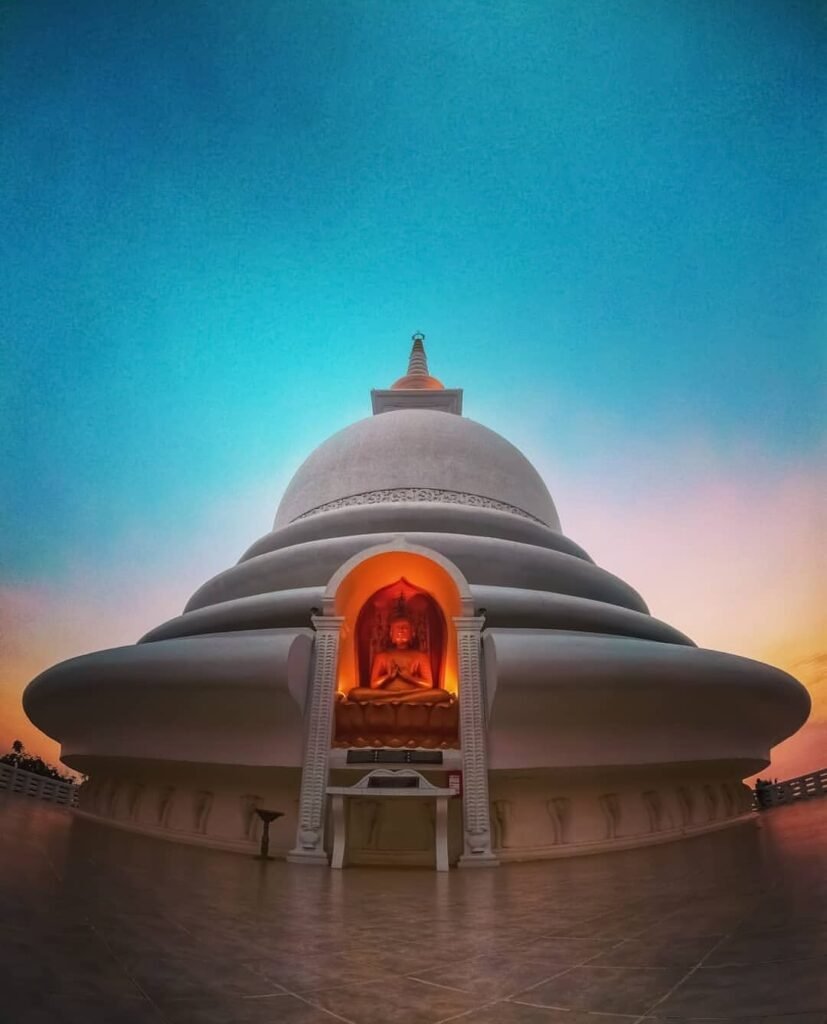
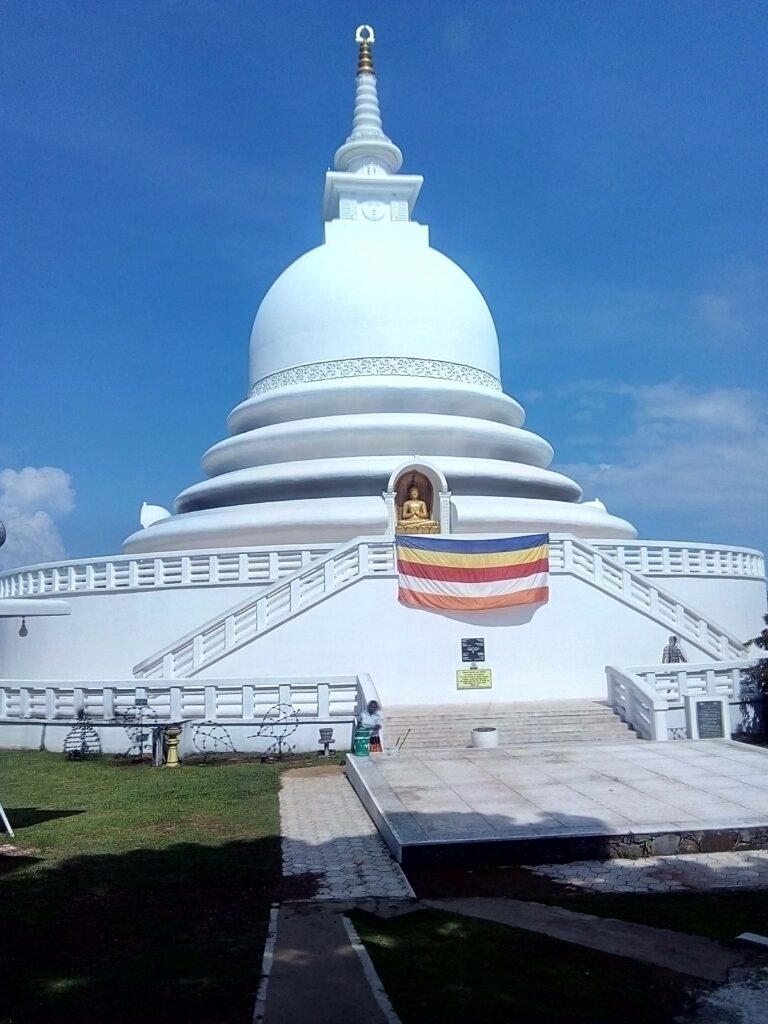
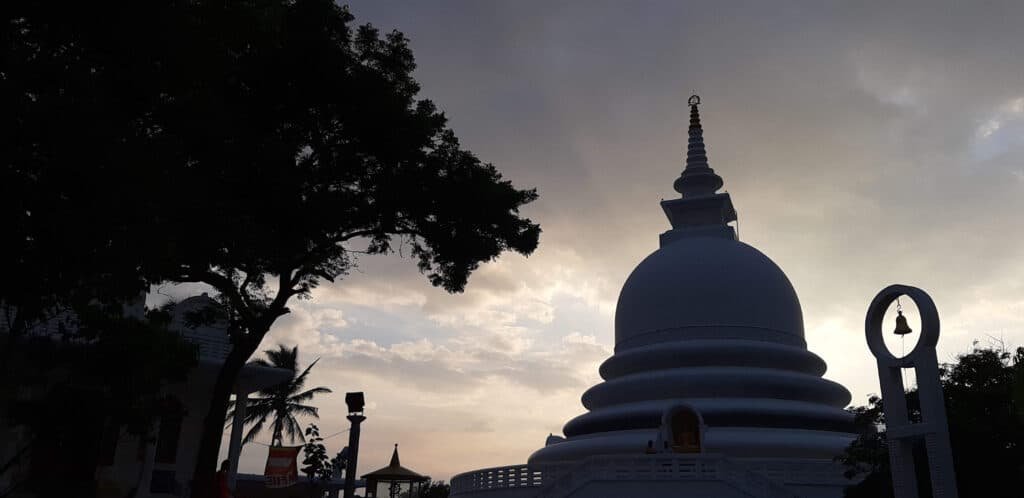
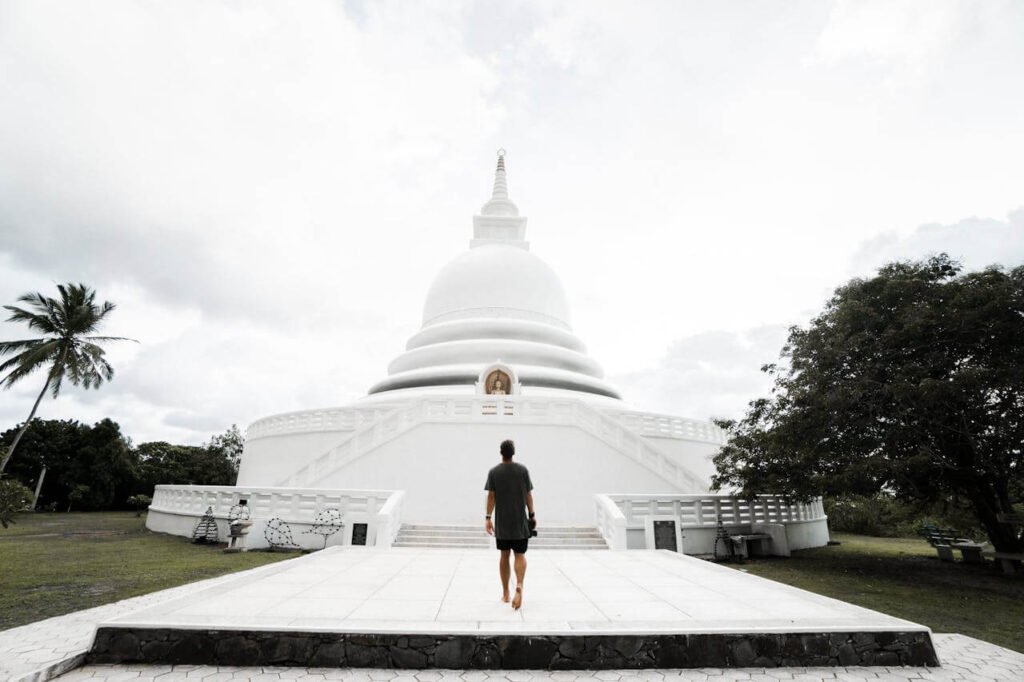
The Japanese Peace Pagoda in Galle is a tranquil sanctuary atop Rumassala Hill offering panoramic views of the ancient city and Indian Ocean coastline. Built in the 20th century by the Nipponzan Myohoji Buddhist order, it stands as a testament to international peace efforts and spiritual unity. Visitors can experience quiet reflection amidst colorful prayer flags and immaculate white architecture, away from the city bustle.
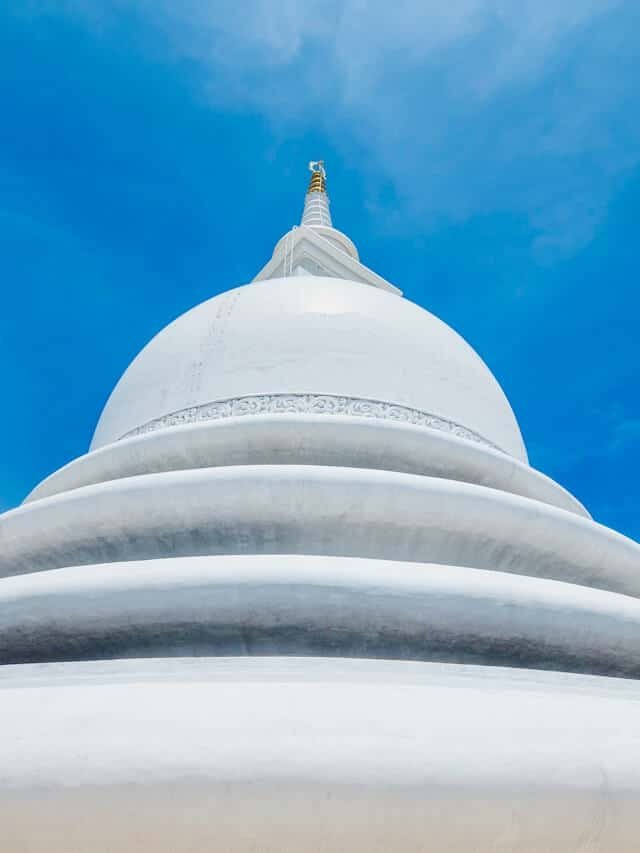
The gleaming white dome representing peace, ideal for peaceful contemplation and photography.
Colorful prayer flags bearing Buddhist chants that symbolize spreading goodwill and harmony on the wind.
Offers 360-degree views over Galle city, Galle Fort, and the Indian Ocean – particularly stunning at sunrise or sunset.
Short walks through tropical greenery and occasional birdwatching opportunities around Rumassala Hill.
Galle, Southern Province, Sri Lanka
Approximately 140 meters above sea level
Daily: 6:00 AM – 6:00 PM
Morning hours for cooler weather and clear views; December to April for dry season
Moderate – involves a 20-30 minute uphill walk on uneven paths
Limited wheelchair access due to stairs and uneven terrain; visitors with mobility issues may require assistance
Built in the early 1980s by the Nipponzan Myohoji order to promote peace following World War II and global tensions.
Constructed during a period of growing international Buddhist outreach and cultural exchange.
Led by Japanese Buddhist monks associated with the Nipponzan Myohoji order, specifically monk Nichidatsu Fujii’s global peace initiatives.
Acts as a Buddhist stupa honoring the spiritual quest for peace and enlightenment, significant in both Sri Lankan and Japanese Buddhism.
Visitors often perform silent prayers or meditation; no formal festivals are held here, emphasizing contemplative peace.
Represents universal peace, friendship between Japan and Sri Lanka, and spiritual harmony transcending national boundaries.
The Japanese Peace Pagoda in Galle was constructed in the early 1980s under the guidance of the Nipponzan Myohoji Buddhist order as part of a global effort to promote peace and harmony after decades of conflict worldwide. Strategically perched on Rumassala Hill, it offers sweeping vistas of Galle Fort, the lush Southern coastline, and the blue expanse of the Indian Ocean. Architecturally, the pagoda is notable for its pure white dome topped with traditional Japanese spire elements, combined with Sri Lankan Buddhist symbolism, illustrating a harmonious blend of cultures. The surrounding area is adorned with prayer flags inscribed with mantras, which flutter gently in the coastal breeze, contributing to a deeply meditative atmosphere. Locals and tourists alike visit to meditate, reflect, or simply enjoy the peaceful environment away from urban noise. The pagoda’s cultural importance lies in its message of universal peace and the strong connection between Japan and Sri Lanka’s Buddhist heritage. The climb to the top, though moderately challenging, rewards visitors with both spiritual solace and breathtaking natural beauty.
The best time to visit the Japanese Peace Pagoda is during the dry season from December to April when the weather is cooler and clearer. Peak visitor months coincide with local holidays and tourist seasons during this period. The off-season, primarily from May to September, offers a quieter experience with fewer crowds and lush vegetation post-monsoon, though occasional rainfall may affect hiking conditions.

Yes, children over 7 years old can enjoy the visit if accompanied by adults. The climb is moderate but safe; younger children may find the uphill walk tiring.
Most visitors spend 45 to 60 minutes to appreciate the views, meditate, or explore the surroundings without feeling rushed.
Wheelchair access is limited due to stairs and steep paths. Visitors with mobility challenges may need assistance. There are no dedicated disability facilities on site.
Visits during the monsoon (May to September) are possible but may be less comfortable due to rain and slippery trails. Early mornings are often clearer.
Admission to the Japanese Peace Pagoda is free of charge, though voluntary donations for maintenance are appreciated.
Visitors should dress modestly out of respect for the religious site – covering shoulders and knees is recommended. Remove footwear before entering sacred areas.
No results available